

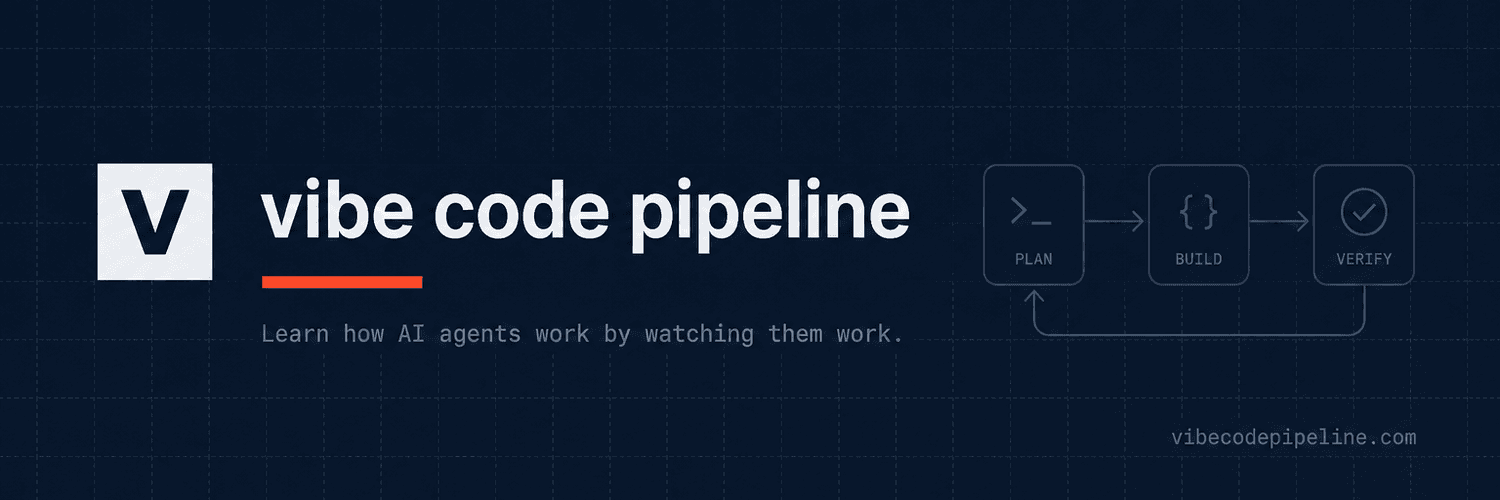
Vibe Code Pipeline is an interactive encyclopedia for AI agents, prompts, and vibe coding pipelines. Watch how agents loop, learn the patterns behind them, and build your own with confidence. Explore the catalog of 1006 agents and 1032 prompt templates, all designed to help you understand and create AI agents effectively.
AI coding, research, debugging, UI generation, content creation, automation, testing, documentation, data analysis, product ideation, customer support, workflow automation
Software development, SaaS development, AI automation, content creation, research, workflow automation, customer support, marketing, data analysis, prototyping, testing, product development
6 ratings
Programmer

AI video with native sound, paid per clip. Nothing stored.

A calmer Mac menu bar, one click away.

Enterprise Software. Intelligent Automation. Global Impact.


Comments
8Watching an agent loop visually beats another explainer post - the loop is the part people consistently misunderstand. How do you render it: recorded traces replayed, or a live simulation? A section with real failure traces (stuck loops, tool-call retry storms) would be especially valuable, since those are the patterns people hit in production but rarely see documented anywhere.
This is a very nice way to learn AI work process. Which I believe to be essential in order to know how to better prompt for AI to understand what you really want to build.
Great site. I've been having a great time using it.
Showing the loop is useful because most agent tutorials hide the handoffs and retries. A valuable next layer would compare a successful trace with a failed one and mark where human review enters. Do the pipeline examples include actual tool calls and recovery paths, or mainly conceptual animations?
Im very happy i came across this
The scale of the catalog is impressive, but a guided path could make it more useful for people who do not yet know what to search for. I would love filters by goal, autonomy level, tool access, and failure risk, followed by a small progression from a single-tool agent to a multi-step workflow. Exporting an example as a runnable starter would connect the visual explanation to practice.
Motivational support for the projects of your life.
Most agent tutorials talk about the loop but never show it. Watching the actual cycle of plan → act → observe → retry makes the patterns click much faster than another text explainer. The catalog of agents and prompt templates is a strong starting point for anyone trying to move from “prompt engineering” to real multi-step workflows.
Really like the idea behind this. Vibe coding is great for getting started, but having a more structured workflow could make a big difference once things get more complex. Curious to see where you take it.