

EU VAT API for ecommerce, SaaS, and headless commerce
VAT Engine is an EU VAT calculation and compliance platform for developers, ecommerce businesses, SaaS products, and headless commerce.
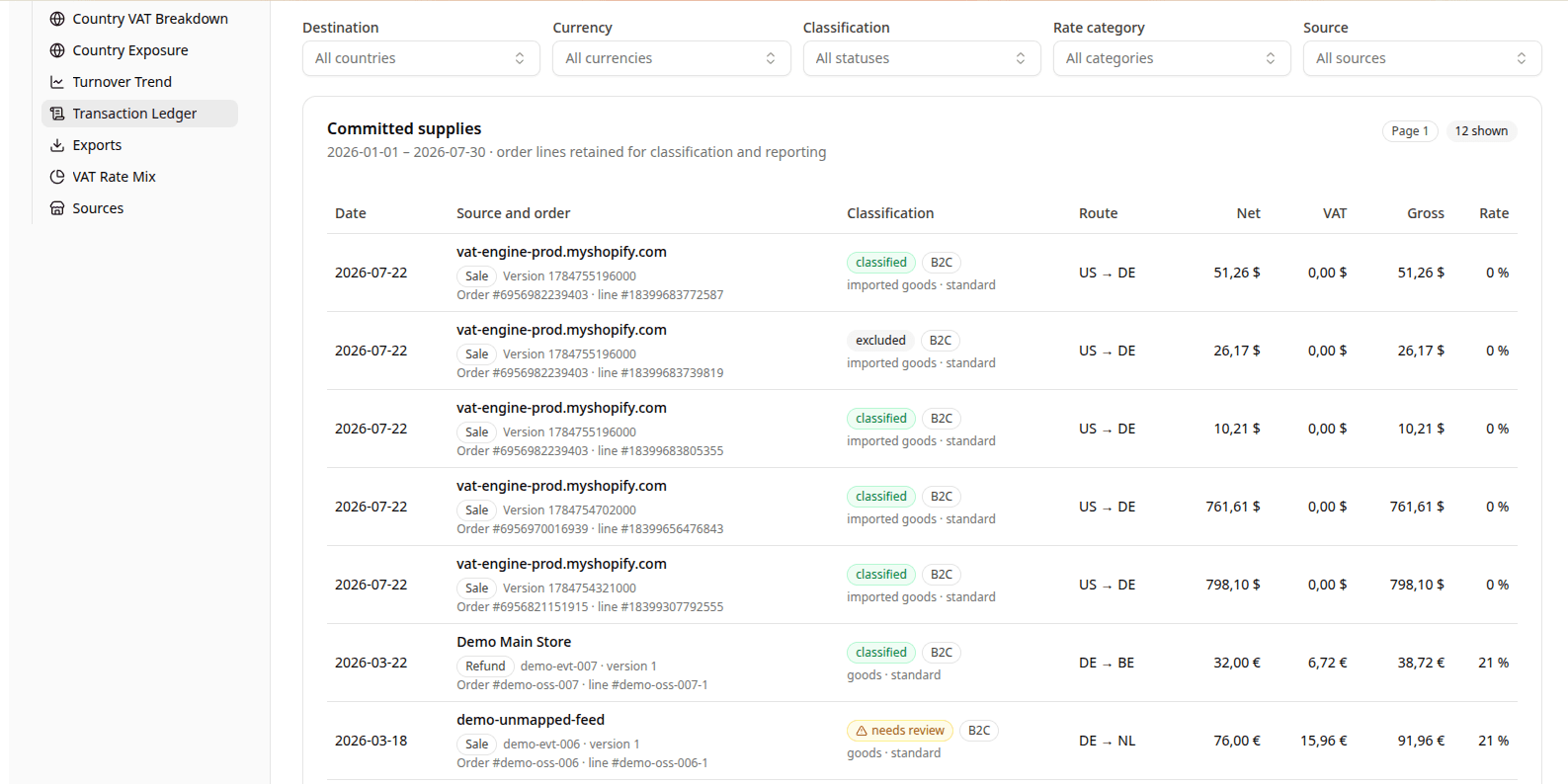
It provides a REST API and web dashboard for VAT calculations, VAT rate lookup, product tax classes, VAT-inclusive and VAT-exclusive pricing, SME VAT thresholds, transaction records, and source-aware reporting.
Date-indexed rate lookup is available where recorded/imported history provides coverage. VAT Engine also includes OSS/IOSS preparation workflows, multi-store reporting, managed source profiles, and an alpha Shopify integration.
The product is currently available with free alpha access while the API, compliance workflows, and integrations continue to be validated.
6 ratings
Solo founder and software engineer building VAT Engine for EU ecommerce and SaaS teams.

AI video with native sound, paid per clip. Nothing stored.

A calmer Mac menu bar, one click away.

Enterprise Software. Intelligent Automation. Global Impact.


Comments
3Solo founder and software engineer building VAT Engine for EU ecommerce and SaaS teams.
I started VAT Engine because EU VAT becomes much harder once you move beyond a simple rate lookup. Developers end up dealing with product tax classes, transaction dates, multiple stores, OSS/IOSS workflows, and the need to understand later why a certain VAT result was produced. I’m building VAT Engine as a developer-first API and dashboard around those problems. It’s currently in free alpha, and I’m especially interested in feedback from developers and ecommerce teams using VAT in real integrations.
Building PZERO, saving you money - pzero.studio
Resolving EU VAT rates by country, product tax class, and transaction date through one API, with OSS/IOSS preparation built in, covers the part of checkout tax that usually gets hand-rolled. When AI spend starts to matter for the business, PZERO at pzero.studio is an option.
roduct
Keeping a record of why a VAT result was produced is the part most tools skip. We hit the same problem with mileage rates: when the rate changes, old transactions have to keep the rate they were calculated with. If a rate in your table gets corrected later, does an existing transaction record keep its original rate and source, or get recalculated?