

Automatic mileage tracker for gig drivers and self-employed
TruMile watches for movement first, then turns on GPS to record the drive, so gig drivers, realtors, sales reps, and the self-employed never lose a deductible mile to forgetting to hit "start." Each trip is classified business, medical, charity, or personal, then rolled into an IRS-ready PDF or CSV report at tax time. Free for 40 auto-tracked trips a month with unlimited manual entries; Pro removes the trip cap for $7.99/mo or $59.99/yr.
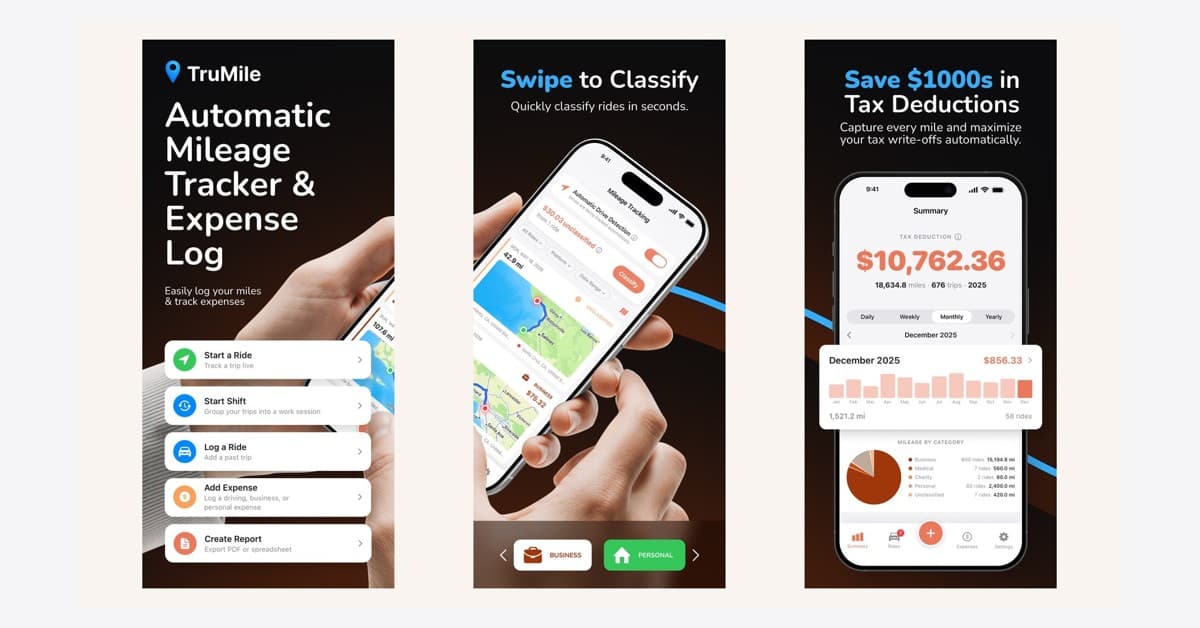
Starts tracking when the car moves and stops when it parks, no manual tap
GPS only runs during a trip, not all day
Swipe or auto-classify trips as business, medical, charity, or personal
Learns saved routes so repeat trips get tagged automatically
IRS-ready PDF or CSV mileage reports with the deduction already calculated
Rideshare and delivery drivers logging deductible miles
Realtors and sales reps driving between appointments
Contractors, freelancers, and small business owners preparing a Schedule C
Handing an accountant a clean mileage log at tax time
6 ratings
roduct

AI video with native sound, paid per clip. Nothing stored.

A calmer Mac menu bar, one click away.

Enterprise Software. Intelligent Automation. Global Impact.


Comments
6The movement-first GPS approach is a smart battery tradeoff — most mileage apps drain the phone by running GPS all day, so this design choice stands out. A question on the auto-detection: how does it handle being a passenger in someone else's car, where movement looks the same as driving? Does auto-classify catch that or is it a manual reclassify? Also curious about learned routes — if you take a detour on a saved route, does it create a new trip or merge with the learned one? The IRS-ready report angle is exactly what gig drivers stress about at tax time. Good launch.
The movement-first tracking approach is interesting, especially for reducing battery usage compared with apps that keep GPS running all day. I also like the learned-route feature for repeat trips. How does TruMile handle situations where someone is a passenger rather than the driver? The IRS-ready PDF/CSV reports also seem particularly useful for freelancers and gig workers at tax time.
Movement-first tracking is a clever tradeoff — most mileage apps either drain the battery with always-on GPS or rely on manual start/stop that people forget. The reports look very US/IRS-focused (Schedule C, IRS-ready PDFs). Are there plans to support other countries' mileage rates and tax rules, e.g. HMRC approved mileage rates in the UK? That would open it up to a lot of self-employed drivers and contractors here.
Makelead Builders
Really useful product
Building Tools That Eliminate Busy Work
Grocery delivery is a big chunk of gig mileage (Instacart and DoorDash shoppers often make a store stop, then a drop-off, then a return in one session). When TruMile auto-detects that as several short stops instead of one long drive, does it merge them into one business trip or log each leg separately? That changes how clean the Schedule C mileage log looks. Also useful to know whether the auto-classify rule can learn that any trip starting at a specific store is business, since shoppers repeat the same few stores every day.
GPS only running during the trip is the right call. On iOS the hard part is usually getting users to grant "Always" location, and many decline at the first prompt. How do you frame that permission in onboarding, and what happens on the free tier if someone only grants "While Using"? Also, do you wake the app through motion-activity detection or significant-location-change? That choice decides how many short trips (a 5-minute drop-off) get missed.