
Product photos in, clear instruction figures out
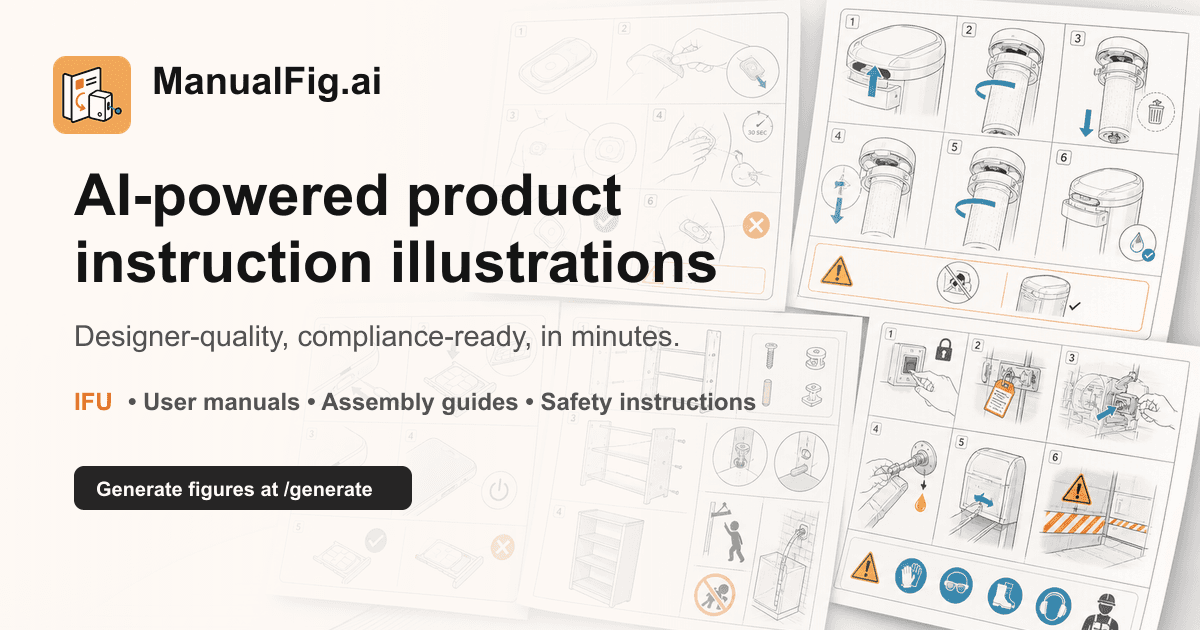
A good product manual shows the part to touch, the direction to move it, and the finished result—not just another attractive product render. ManualFig AI helps small product teams create those practical visuals from the references they already have. Start with a product photo, CAD screenshot, sketch, existing manual page, or written step list, then generate simplified line drawings and instruction panels with arrows, numbered steps, and part callouts. Use it for assembly guides, packaging inserts, quick-start cards, maintenance instructions, and help-center articles. Figures can be revised with a plain-language request, compared across versions in the same project, and exported as PNG or SVG for documentation and print layouts. It also supports drafts for medical-device instructions, which should be checked by the responsible specialists before use. The emphasis is on clear actions and a consistent illustration style across a whole guide. Free credits let users try the process, with paid plans for ongoing production.
Reference-guided product line drawings from photos and CAD screenshots
Numbered instruction panels with arrows and part callouts
Plain-language revisions with project and version history
PNG and SVG export for manuals and layout tools
Assembly, maintenance, troubleshooting, and quick-start illustration workflows
Create packaging inserts and quick-start cards for ecommerce products
Illustrate furniture assembly with hardware callouts and numbered actions
Explain filter replacement, cleaning, and routine appliance maintenance
Prepare work-instruction figures for manufacturing documentation
Draft device-use panels for specialist-reviewed IFU documentation
6 ratings
CEO of SciDraw AI

AI video with native sound, paid per clip. Nothing stored.

A calmer Mac menu bar, one click away.

Enterprise Software. Intelligent Automation. Global Impact.


Comments
15CEO of SciDraw AI
Hi Fazier! ManualFig AI is focused on the pictures people actually follow when using a product: which part to touch, where it moves, and what the finished step looks like. Start from a product photo, CAD screenshot, or written procedure, then build line art and numbered panels for a manual or quick-start guide. Revisions and versions stay in the same project, with PNG and SVG export. We would love feedback from product teams and technical writers on the assembly or maintenance steps that are hardest to explain visually.
The reference-guided line drawings and SVG export seem well suited to packaging inserts, where clarity beats polished renders. Can a project keep a shared visual style across multiple products or manuals?
The reference-guided line drawings and SVG export seem well suited to packaging inserts, where clarity beats polished renders. Can a project keep a shared visual style across multiple products or manuals?
Wow I'm a product developer myself (physical products I mean) and this is very interesting. Designing a product is all fun, but when you need to ship real products, you need to think about assembly or "how-to-use" instructions. And then comes the journey of producing all the assets for the packaging and the user manuals. I think it's very cool to see someone thinking about something so niche.
Building PZERO, saving you money - pzero.studio
Turning product photos, CAD screenshots, or step lists into simplified line drawings with arrows, numbered panels, and part callouts, then exporting PNG or SVG with version history, fits instruction docs that used to be redrawn by hand. When the models behind those visuals start stacking up, we top up at pzero.studio.
Bringing founders early users and feedback to help them refine their software products.
Does ManualFig AI make turning a product photo into numbered instruction figures with arrows feel clear enough for a real quick-start card? Happy to send a totally free first-impression video if useful.
sales trader
Showing the credit cost before generating is a great call. How does 4K 60fps hold up on fast motion, like dancing at a party?
This fills a real gap for small product sellers. Most can't afford a technical illustrator for a simple quick-start card. When you revise one step with a plain-language request, does the rest of the guide keep the same line weight and part labels, or do you regenerate the whole set to keep it consistent?
Smart niche. Most AI image tools go for pretty renders, but manuals need clear arrows and numbered steps. SVG export is a nice touch for print layouts. Can you lock a consistent line style across every figure in one project?
Do you want a raw, practical "maker/hardware builder" perspective, a clean B2B software review, or something snappy and conversational?
Instruction visuals rarely get proper tooling, so nice to see this. Does the SVG export keep the part callouts and step numbers as live text? That would let a translator localize a manual without redrawing anything, which is where most multilingual manuals get stuck.
Really clever way to turn product photos into clean, manual-ready illustrations. This could save a lot of time!
SMS-Act Managed Verification
Reference-guided line art with numbered panels makes sense for packaging inserts. How does it handle parts hidden in the source photo, like hardware inside a housing? Does it ask for another reference, or draw an exploded view from what it can infer?
One tricky case in assembly instructions is distinguishing “push” from “rotate” when the same part appears in consecutive steps. Can users adjust the arrow type and movement direction without regenerating the whole illustration? That would make reviewing and correcting ambiguous steps much easier.
A useful safeguard for technical instructions would be a clear distinction between geometry that came directly from the reference material and anything the model had to infer. For maintenance steps or medical-device drafts, a small 'needs human verification' flag on uncertain parts/callouts could reduce the risk of a polished illustration implying more certainty than the source actually provides.