
Turn your notes, PDFs and links into quizzes and flashcards
4.8(6)6Online Learning
Knovato is an AI study app for students who already have the materials — and still blank in the exam. You dump notes, PDFs, lecture links, and transcripts into a folder library. From that corpus it generates quizzes, flashcards, writing drafts, presentations, and study plans grounded in your syllabus, not the open web. Chat stays scoped to the folder. Bibo, a knowledge-gremlin companion, runs short daily sessions with streaks, XP, and weekly leagues so practice actually happens after Monday. Web-first, German and English, Pro after a 7-day trial. Not a language app. Not another generic chatbot.
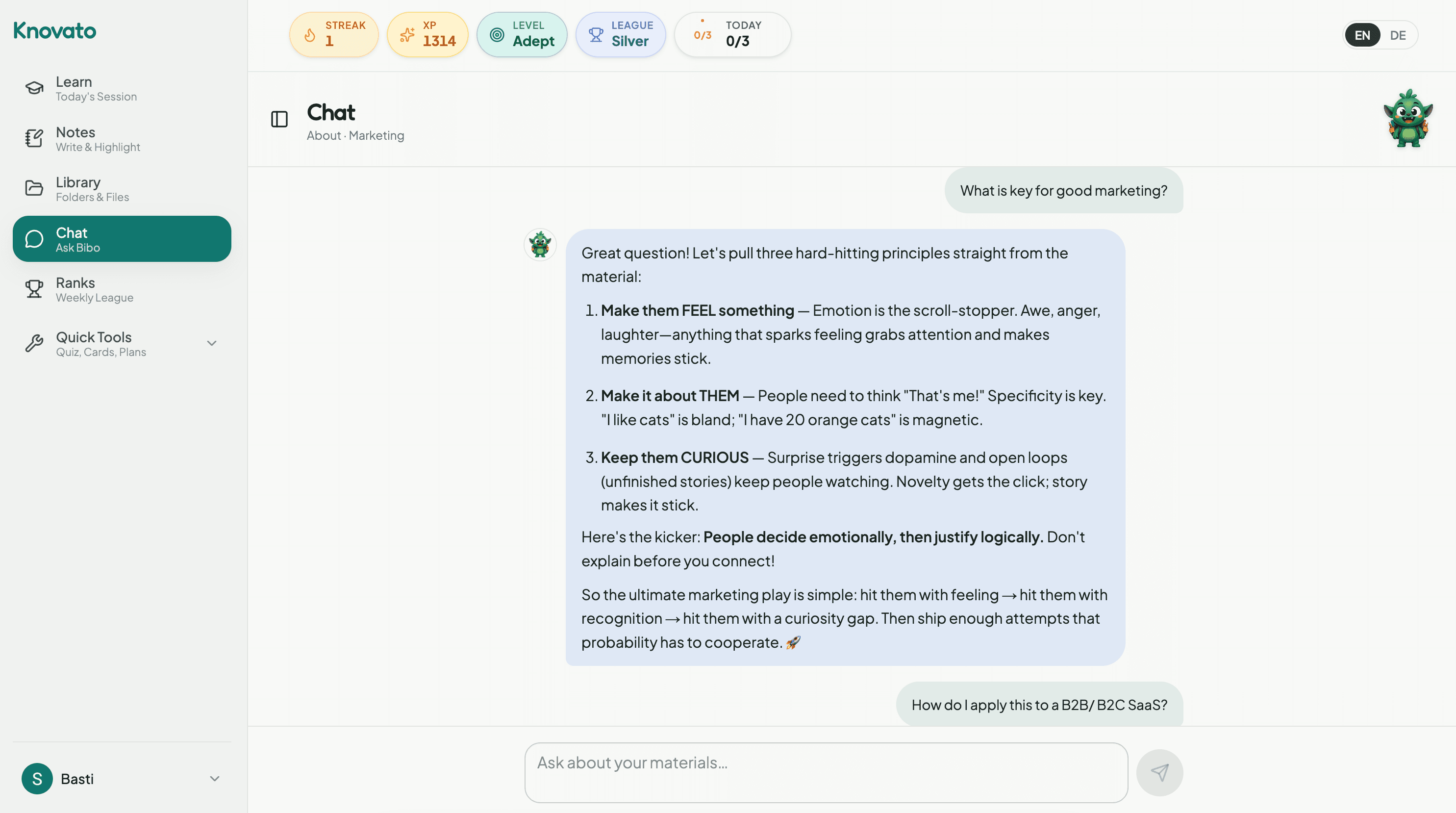
- Upload notes, PDFs, links, and transcripts into subject folders
- Generate quizzes, flashcards, study plans, writing drafts, and slides from your files
- Chat that’s scoped to a folder — not the whole internet
- Daily companion sessions (Bibo) so you actually come back
- Streaks, XP, and weekly leagues for any subject — History, Med, CS, not just languages
- Built in German and English
6 ratings
Quit my 9-5 to bet on myself. Now I’m building SaaS products, scaling my brand, and documenting the solo founder journey - all while living free in Bali. 🏝️

AI video with native sound, paid per clip. Nothing stored.

A calmer Mac menu bar, one click away.

Enterprise Software. Intelligent Automation. Global Impact.


Comments
6Starting from the student's own materials is the right call — generic question banks never match what a specific exam actually tests. The folder-scoped chat is a nice touch too, since it stops the AI from drifting into topics that aren't on the syllabus. Genuine question: does it support spaced repetition scheduling or Anki export? That's usually where serious learners end up once they've built a big flashcard deck.
The Bibo daily sessions with streaks and weekly leagues are a clever way to turn revision into a habit instead of a pre-exam cram. Supporting both German and English from day one is a nice touch for students who study in both.
How do you decide which facts from a long PDF become cards? When I tried this kind of tool, the hard part was not generating cards but skipping the obvious ones. Do users get to review the card list before it is saved, or does it go straight into study?
Building PZERO, saving you money - pzero.studio
Turning a student's own notes, PDFs, links, and transcripts into quizzes, flashcards, and syllabus-grounded study plans keeps revision tied to what they actually have, not a generic chatbot dump. If you ever want cheaper AI for the business, PZERO is at pzero.studio.
Creator of The Faceless Channel Vault — 150 AI prompts for faceless YouTube channels
Starting from the student's own materials is the key insight — generic question banks never match the professor's actual slides, so quizzes generated from my own notes and PDFs would actually prepare me for the real exam. The folder-scoped chat is smart too; it keeps answers grounded in the course instead of drifting off into internet generalities. And the daily sessions with streaks tackle the actual bottleneck, which is showing up consistently. Curious how it handles dense PDFs like scanned textbooks — that's usually where these tools struggle.
Starting from a student's own notes is a strong approach because the practice stays close to the actual syllabus. I also like the folder scoped chat and the short daily sessions for building a steady study habit. How do you handle scanned PDFs or diagrams when generating cards?