Founder at InventorysHub | Building Inventory Management Software
I really like the idea of helping creators monetize their expertise without requiring calls or lengthy courses. The asynchronous Q&A approach is practical for both creators and buyers. One question: are there plans to support team accounts or collaboration for businesses and agencies in the future?
The cross-source reading angle is useful: webpages, Kindle, and PDFs cover where people actually save long-form content. I like that it focuses on listening and explanation together rather than just summarizing text.
Combining read-aloud with explanations is more useful than a plain text-to-speech wrapper, especially across webpages, Kindle, and PDFs. How is private document content handled: is it retained for later sessions, or can users choose a no-storage mode?
CastReader has great potential! A few improvements could make it even better. I'd love to share my feedback and suggestions.
WhatsApp: https://wa.me/447307349530
Telegram: t.me/rforrank
i write a16z speedrun scout checks within 24hours | Co-Founder & CTO at Dial AI
Content accessibility friction finally solved. People with visual impairments, dyslexia, ADHD, and reading challenges are locked out of massive amounts of content - research papers, long articles, PDFs, ebooks - not because the content isn't accessible, but because reading it requires uninterrupted focus and visual scanning. The cognitive load is enormous. CastReader removes that entire barrier by turning any written content into audio, letting people consume information while doing other things: commuting, exercising, multitasking. The multi-language support is huge for non-native English speakers and language learners too. For students with learning differences, researchers who need to process papers faster, and professionals swimming in documentation, this isn't just nice-to-have accessibility. It's the difference between being able to learn and not. Works on any website or PDF means no friction on adoption. Real win for making information equity a reality.
The Kindle + PDF support is the real differentiator here — most read-aloud tools stop at web articles, but the stuff people actually want to get through on a commute is their saved long-form: books and dense research PDFs. Does the "explains" layer summarize as it reads, or answer questions on demand? That one distinction matters a lot for studying vs. passive listening.



Comments
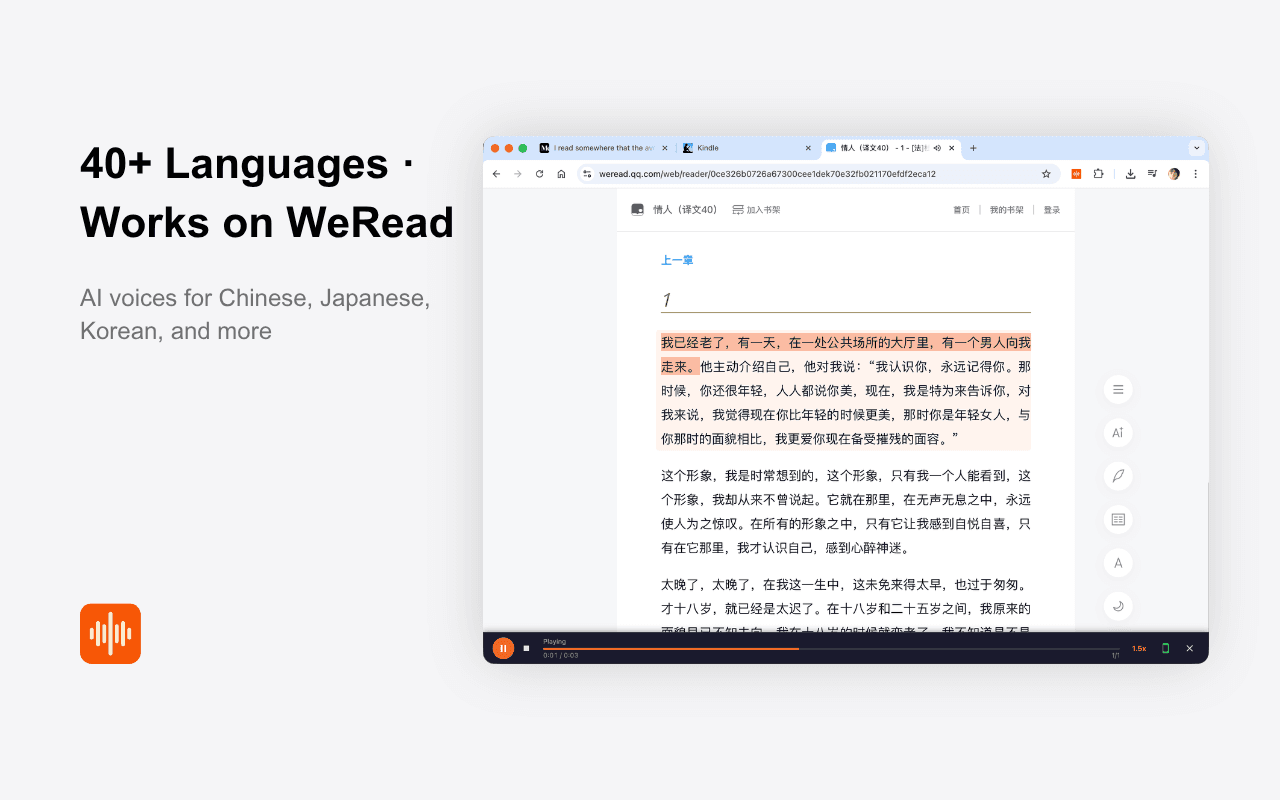
13Being able to listen to webpages and PDFs across 40+ languages is genuinely useful. Nice accessibility-focused product.
Founder at InventorysHub | Building Inventory Management Software
I really like the idea of helping creators monetize their expertise without requiring calls or lengthy courses. The asynchronous Q&A approach is practical for both creators and buyers. One question: are there plans to support team accounts or collaboration for businesses and agencies in the future?
The cross-source reading angle is useful: webpages, Kindle, and PDFs cover where people actually save long-form content. I like that it focuses on listening and explanation together rather than just summarizing text.
VisitorType tells humans, AI crawlers, and AI agents apart — then lets you serve each one differently. One snippet, GTM-style rules, zero deploys.
I really like the idea and I think this will be really useful for students
i created interactink
Cool website!! Is it free?
free
Combining read-aloud with explanations is more useful than a plain text-to-speech wrapper, especially across webpages, Kindle, and PDFs. How is private document content handled: is it retained for later sessions, or can users choose a no-storage mode?
AI agents for finance operations
The per-response "Listen" button for ChatGPT/Claude answers is such a small but genius idea.
Data science
CastReader has great potential! A few improvements could make it even better. I'd love to share my feedback and suggestions. WhatsApp: https://wa.me/447307349530 Telegram: t.me/rforrank
i write a16z speedrun scout checks within 24hours | Co-Founder & CTO at Dial AI
Content accessibility friction finally solved. People with visual impairments, dyslexia, ADHD, and reading challenges are locked out of massive amounts of content - research papers, long articles, PDFs, ebooks - not because the content isn't accessible, but because reading it requires uninterrupted focus and visual scanning. The cognitive load is enormous. CastReader removes that entire barrier by turning any written content into audio, letting people consume information while doing other things: commuting, exercising, multitasking. The multi-language support is huge for non-native English speakers and language learners too. For students with learning differences, researchers who need to process papers faster, and professionals swimming in documentation, this isn't just nice-to-have accessibility. It's the difference between being able to learn and not. Works on any website or PDF means no friction on adoption. Real win for making information equity a reality.
Founder of Printo Go
Good job,this is my specialty and I know how wonderful it is,but does it support languages?
The Kindle + PDF support is the real differentiator here — most read-aloud tools stop at web articles, but the stuff people actually want to get through on a commute is their saved long-form: books and dense research PDFs. Does the "explains" layer summarize as it reads, or answer questions on demand? That one distinction matters a lot for studying vs. passive listening.
ReciteMail drafts the email reply in your voice, in seconds, privately on your own machine.
Students would definitely appreciate this.